Book a free hearing test

At The Hearing Care Partnership, our hearing tests are completely free. Whether you’re looking for a routine hearing check, have noticed changes in your hearing, or would like a more comprehensive assessment, we’re here to help.

With over 400 locations across the UK, our experienced audiologists provide personalised hearing care with no obligation to purchase hearing aids or additional services.

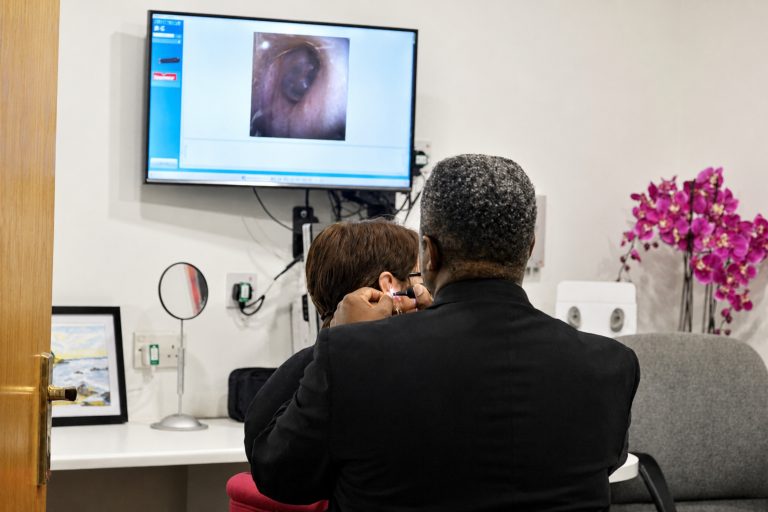
An audiologist performing a hearing assessment on a patient.

Interest-free payment plan available for hearing aids

Unlimited free aftercare with every hearing aid purchase

Free hearing tests for all adults

Experienced audiologists and hearing care experts

No obligation to proceed after your hearing test

Which hearing test is right for you?

To help ensure every patient receives the most appropriate assessment, we offer three types of free hearing tests. Each appointment is designed around your individual hearing needs and builds upon the previous assessment.

promotional image

Initial Hearing Test

30 minutes

Ideal for adults who would like a routine hearing check or an initial understanding of their hearing health. An Initial Hearing Test includes:

  • A discussion about any hearing difficulties you may be experiencing
  • Identifying situations where you’d like to hear more clearly
  • An ear health check, including images of your ear canals
  • A hearing screening
  • Recommendations for further assessment, if required
promotional image

Complete Hearing Test

60 minutes

Recommended for adults aged 55+ who would like a more in-depth assessment of their hearing and ear health. A Complete Hearing Test includes:

  • Everything in the Initial Hearing Test
  • More time to understand your hearing concerns, lifestyle and listening needs
  • Middle ear function testing (tympanometry)
  • A full hearing assessment to determine hearing thresholds
  • Additional assessments to understand how hearing loss may affect daily life
  • Personalised recommendations based on your results
promotional image

Ultimate Hearing Test

90 minutes

Our most comprehensive hearing assessment, ideal for adults aged 65+, those experiencing hearing concerns, or anyone seeking a detailed understanding of their hearing health. An Ultimate Hearing Test includes:

  • Everything in the Complete Hearing Test
  • A detailed exploration of the situations where you’d like to hear better
  • Input from family members or loved ones, where appropriate
  • Advanced assessment of hearing in noisy and complex listening environments
  • Further evaluation of how hearing solutions may help
  • Highly personalised recommendations tailored to your lifestyle, hearing challenges and long-term goals

Not sure which assessment is right for you?

Follow our booking process, answer the questions that match your situation, and find out the most appropriate appointment.

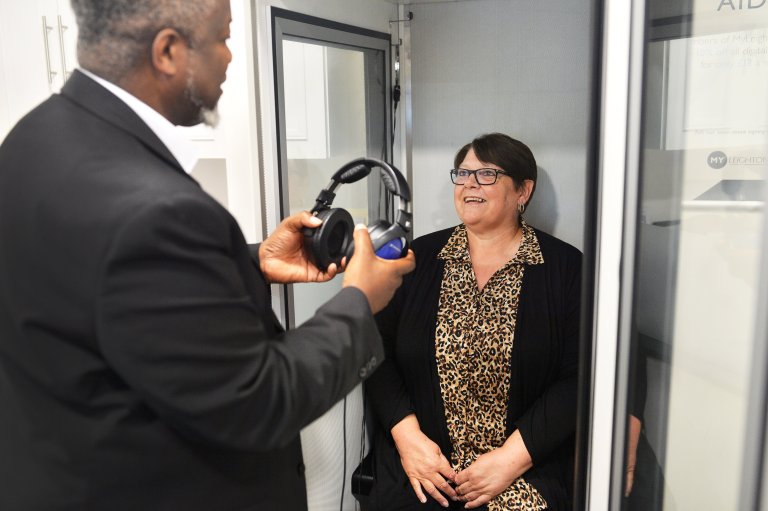
Audiologist providing headphones to patient in soundproof booth for hearing test.

What is a hearing test?

A hearing test helps determine whether you have hearing loss or any ear health issues and provides valuable insight into your overall hearing health.

During your appointment, your audiologist will take the time to understand your hearing concerns, lifestyle and medical history before carrying out a series of tests. Depending on the type of appointment you book, these may include hearing screening, tympanometry, pure tone audiometry and speech testing. Together, these tests build a comprehensive picture of your hearing health and needs, helping us create a personalised hearing solution tailored to you, if needed.

Once your assessment is complete, we’ll explain your results clearly and discuss any recommendations to help you hear with confidence.

When was your most recent hearing test?

How often do you visit the doctor, dentist or optician? And when was the last time you had a hearing test? If it wasn’t recently, you’re not alone. But it’s just as important to visit an audiologist regularly.

Having regular hearing tests will help you keep your hearing healthy and will help us increase the chance of catching any irregularities early on, avoiding any further hearing decline.

This is particularly important if you’re over 50, as the risk of hearing loss rises to 40% in this age group. Increasing again to 70% in the over-70s.

Am I eligible for a free hearing test?

All adults are eligible for a free hearing test at The Hearing Care Partnership. You don’t need a GP referral or to go through the NHS, simply book an appointment directly with us. Our friendly audiologists are here to ensure you feel comfortable and supported throughout the process.

How do I know if I need a hearing test?

Perhaps you struggle to enjoy conversations when there’s too much background noise, you often need people to repeat themselves or speech can sound muffled or lack definition – these are all signs that you might be experiencing hearing loss.

As hearing loss is often gradual, it can be hard to tell it’s happening. In fact, it’s often a loved one that notices your hearing loss long before you do. On average, it can take around seven years for someone to recognise and accept their hearing loss and choose to wear hearing aids.

Here are some of the signs of hearing loss that indicate it’s a good idea to get a hearing test:

Feeling isolated from conversations due to hearing difficulties

Finding it difficult to communicate in groups or with background noise

Turning up the TV volume louder or needing subtitles

Needing to ask people to repeat themselves

Missing sounds like the doorbell, oven timer or phone calls

Apart from difficulty in hearing, hearing loss can also affect your psychological wellbeing. Feelings of isolation and frustration are common among those suffering from hearing loss as they find it harder to interact and communicate with other people, so they often avoid doing so altogether. Depression and even dementia are more likely to develop if hearing loss is not addressed, so the warning signs shouldn’t be ignored.

What happens in a hearing test?

The assessments carried out will depend on the type of hearing test you book.

1. Understanding your hearing needs

Your audiologist will take the time to learn about your hearing concerns, lifestyle and daily listening environments. This helps us understand how your hearing may be affecting everyday activities and allows us to tailor the assessment to your individual needs.

2. Ear and hearing health checks

We’ll review your medical and hearing history before examining your ears for earwax build-up, inflammation or other conditions that could affect your hearing. Depending on your appointment type, further ear health assessments may be carried out.

3. Hearing assessment

We’ll perform the most appropriate hearing tests for your appointment, which may include hearing screening, hearing threshold testing, speech testing and middle ear assessments. These tests help us build a complete picture of your hearing health.

4. Results and personalised recommendations

Once your assessment is complete, we’ll explain your results clearly and discuss any next steps. If needed, your audiologist will provide personalised recommendations, which may include hearing aids, earwax removal, monitoring or referral for further investigation.

How long does a hearing test take?

Depending on the hearing assessment type you’ve booked, the appointment takes between 30 and 90 minutes. The most suitable appointment depends on your age, hearing concerns and individual hearing needs. And once complete you’ll receive a full breakdown of your results. We’ll then discuss recommendations on what to do next and whether hearing aids or further treatment would be beneficial to you.

How often should I have a hearing test?

Everyone’s hearing changes over time. It’s recommended to have a hearing test at least every two years, especially if you’re over 50 or notice any changes in your hearing. Regular tests help detect any early signs of hearing loss and ensure your hearing aids, if you use them, are performing optimally.

If you experience sudden hearing issues, don’t wait and seek the advice of a GP or hearing professional as soon as possible.

Close up shot of a hearing aid dispenser fitting hearing aids.

What happens if hearing loss is found?

If your audiologist identifies signs of hearing loss, don’t worry. Hearing loss is very common and there are a range of effective treatment options available.

If hearing aids are recommended, your audiologist will explain the available options and help you find a solution that best suits your needs, lifestyle and the situations where hearing better matters most to you.

We offer a 60-day money-back guarantee on all our hearing aids, so you can find out which model best suits your ears.

100% independent
As a truly independent hearing care provider we are not tied to a single manufacturer. This enables us to assess a wide range of hearing aid technologies and recommend the most suitable option for each patient.

Discreet hearing aids
Modern hearing aids are smaller, smarter and more discreet than ever before, offering exceptional sound quality while fitting seamlessly into everyday life.

Find your perfect hearing aid
Explore our range of hearing aids. Our audiologists are on hand to answer your questions – from designs and features to costs and payment plans.

If your hearing loss is caused by a build-up of excess wax in the ear canal, your audiologist will discuss options for removal.

At The Hearing Care Partnership, we use the latest and safest technologies to remove earwax, choosing from manual removal, microsuction and water irrigation, depending on what’s best for your ears.

Our earwax removal services cost a flat fee of £70 for an in-practice consultation and an appointment will take about 30 minutes.

'Free Hearing assessments' banner.

How much does a hearing test cost?

At The Hearing Care Partnership, our hearing tests are completely free.

There is no obligation to purchase a hearing aid or use our earwax removal service, even if these are recommended following your appointment.

Our role is simply to provide expert advice, assess your hearing health and help you make informed decisions about any next steps.

Please note, charges may apply for non-medical referral test result reports.

Our Free hearing tests reviews

The hearing assessment this morning was highly professional and thorough. Shellie was excellent and very knowledgeable. Every aspect of the assessment was clearly explained and the results were communicated effectively. Would recommend an assessment without reservation. Many thanks.
Profile icon Patrick McGovern
Trustpilot
I felt that the hearing test was carried out extremely professionally and competently, with detailed explanations at every stage. I was shown the results and my hearing profile, and the demonstration of what hearing aids could do for me was amazing.
Profile icon Malcolm Holliday
Trustpilot
Shivali Chavda, the audiologist who saw me, could not have been better. She thoroughly explained all aspects of the hearing test and the options available to me. The care and aftercare have been first class. I had previously tried NHS hearing aids but did not get on well with them. I was nervous about spending a lot of money going privately but it has proved to be worth every penny. It is extremely reassuring to know that help is available whenever required and that I will be checked regularly. Highly recommend.
Profile icon Linnette Ralph
Trustpilot
Grisham Trambaclal was excellent very thorough and explained everything to me at depth and put me at ease. Would highly recommend. I saw her at Edmond & slatter in Glenfield.
Profile icon Amanda Kerr
Trustpilot
An excellent service from the thorough and sensitive hearing test to the efficient fitting and follow up. Claire Francis provided a reassuring approach and made the whole process stress-free.
Profile icon David Wilson
Trustpilot
This was my first hearing test face to face rather than on line. Ms Siddhrah Malik was truly excellent at her job. I knew at all stages what to expect and why the questions were asked and what the tests were for. I wasn't expecting the thoroughness of the process but could not fault Ms Malik in any way. Not enough stars really.
Profile icon Roger Mayes
Trustpilot

How do I book a free hearing test?

Book online

Book a hearing appointment using our simple online booking system.

Book by phone

Call our friendly team on 0800 52 00 546. Lines are open Monday to Saturday 8.30am – 5pm.

Frequently asked questions

It’s true that your risk of hearing loss increases as you get older: the UK charity Action On Hearing Loss estimates that more than 40% of people over 50 have hearing loss, rising to 71% of people over the age of 70. So it’s tempting to keep putting off getting a hearing test, but the reality is there’s no such thing as being ‘too young’ for a hearing test.

In fact, our audiologists recommend regular hearing tests to anyone over the age of 18, or to anyone who is experiencing signs of hearing loss or changes to their hearing.

It’s a good idea to bring someone with you to your hearing test. Having a friend or family member can provide support, help you remember important information, and assist in discussing any concerns you may have with the audiologist. Their presence can also help ensure that you feel comfortable and relaxed during the appointment.

If you are a parent or guardian with concerns about your child’s hearing and they are under the age of 18 you should seek a referral from your GP to your local NHS paediatric audiology service.

When talking to a loved one about hearing loss, it’s important to:

  • Choose the right moment
  • Avoid accusatory or aggressive language
  • Remain positive
  • Listen and be supportive

It can be a hard topic to bring up, but approaching it with understanding and empathy will make the conversation easier.

Find out more

A couple talking and having tea.

Signs and symptoms of hearing loss

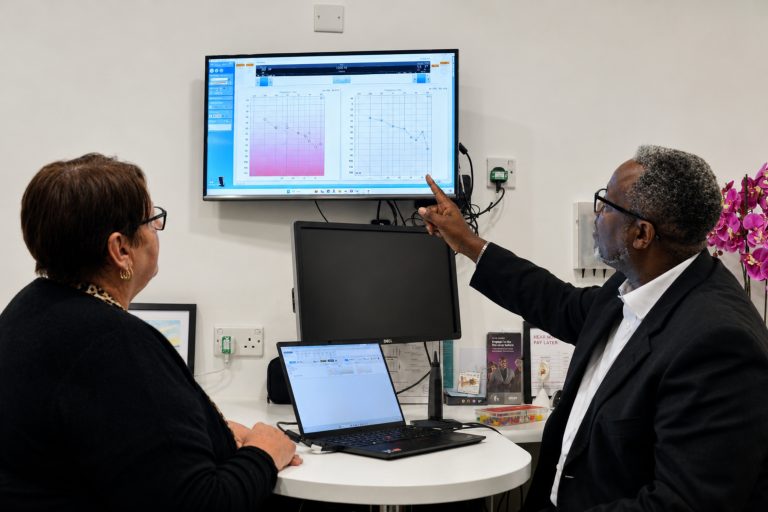
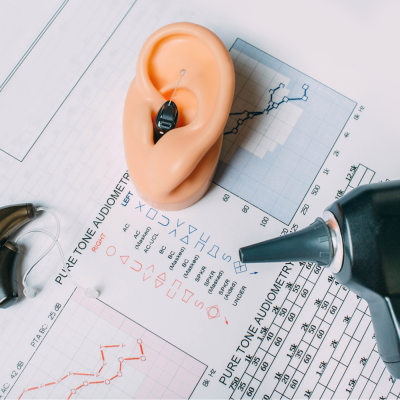
Hearing assessment results featuring audiogram, otoscope, artificial ear with IIC device, and two BTE hearing aids.

What causes hearing loss?

What happens in a hearing test?

Two people dancing in a kitchen.

1. You and your lifestyle

We want to know what’s important in your life and how your hearing might be impacting this. So, we’ll discuss your work and home environment, your hobbies and your interests. This will give us the full picture when understanding your needs.

A woman writing on a clipboard.

2. Medical history

We’ll also need to delve into your medical history, asking questions to find out about any relative conditions or symptoms, such as ear infections or tinnitus. This helps our audiologists to decipher whether you suffer from any medical conditions that could have an effect on your hearing.

An audiologist examining the ear of a patient with an otoscope.

3. Otoscopy

The next step is to use an otoscope to look into your ears. An otoscope is a simple instrument that helps us see inside your ear canals. We’ll check that they’re in healthy condition, with no obvious obstructions, inflammations or earwax build-ups that might be contributing to hearing loss.

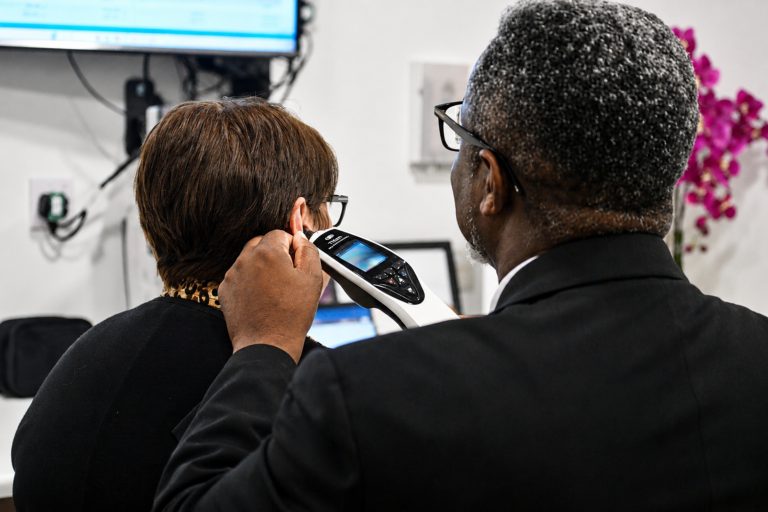
A patient having a tympanometry test.

4. Tympanometry

This is followed by a test for the eardrum and middle ear. A simple and quick tympanometry procedure will change the pressure in your ear canal and record the movement of your eardrum. It can detect a variety of conditions, from glue ear to eustachian tube dysfunction.
This part of the test is unique to The Hearing Care Partnership – it’s not usually offered by other high-street audiologists and was previously only carried out at specialist ENT hospital clinics.

An audiologist performing a hearing test on a patient.

5. Pure tone audiometry

The fifth and most important part is the pure tone audiometry test. This is what determines if you have hearing loss and measures its severity. The test is simple in concept: it aims to determine the quietest sound you can hear. Wearing headphones, we’ll play you a series of tones at different frequencies/levels and ask you to respond when you hear them. Wherever you stop being able to hear the tones will indicate your level of hearing loss. Or, you might be able to hear them all – fabulous!

‘Speech-in-noise’ test.

6. Speech test

Known as a ‘speech-in-noise’ test. Headphones and pre-recorded sounds are used to replicate conditions found in common everyday environments – such as coffee shops or restaurants – where background noise often causes problems for people with hearing loss. We also perform a ‘speech-in-quiet’ test, to measure speech recognition with no background noise.